

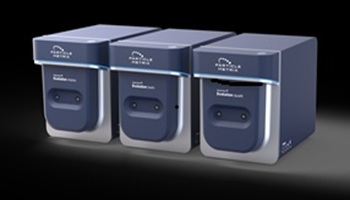
By using multi-laser Colocalization NTA (C-NTA) to cross-reference fluorescently tagged drug cargo against particle membranes in real time, the Particle Metrix ZetaView® Evolution solves biopharma’s critical blind spot: distinguishing fully loaded therapeutic nanoparticles from empty, inactive lipid shells. In the fast-paced world of biopharmaceuticals and academic research, submicron architectures have taken center stage. The multi-billion-dollar boom in mRNA vaccines, cell-free therapies, and targeted gene delivery platforms has turned nanoparticles into the ultimate vehicles of modern medicine.
However, as formulations grow more complex, researchers face a frustrating obstacle. Creating these submicron delivery packages, such as lipid nanoparticles (LNPs), viral vectors, and extracellular vesicles (EVs), is no longer the hardest part. The true bottleneck lies in knowing exactly what is inside them.
Traditional physical measurement techniques frequently fall short, treating empty, ineffective delivery shells identically to fully loaded, therapeutic particles. To bridge this critical gap, advanced laboratories are turning to a multi-parameter solution: the Particle Metrix ZetaView® Evolution. By combining Nanoparticle Tracking Analysis (NTA) with multi-laser fluorescence, this platform is shifting the industry focus from simple particle counting to true particle phenotyping.
The “Empty vs. Full” Payload Dilemma
For years, techniques like Dynamic Light Scattering (DLS) and standard, single-channel NTA served as the standard benchmarks for quality control. They provided two foundational metrics: hydrodynamic diameter and total particle concentration.
However, in a clinical setting, size and quantity represent only half the story. If a batch of lipid nanoparticles fails to encapsulate its mRNA cargo, or if a gene therapy line is dominated by empty viral capsids, the formulation is therapeutically inert. Traditional light scattering operates in grayscale. It tracks the outer silhouette of a particle but remains blind to its internal contents.
This is where the ZetaView® Evolution introduces a critical paradigm shift. Through its advanced Fluorescence NTA (F-NTA) and Co-localization NTA (C-NTA), the system enables researchers to look past the physical shell and directly evaluate cargo efficiency.
| Analytical Approach | Operational Mechanism | Payload & Cargo Visibility |
|---|---|---|
| Traditional Single-Channel NTA (Scatter-Only) |
Measures Size & Total Count |
Blind to Payload / Empty Shells |
| ZetaView® Multi-Laser Colocalization (C-NTA) |
Separates Shell Signal from Cargo |
Calculates Exact Encapsulation Ratio |
Visualizing Cargo via Multi-Laser Colocalization
Using the system’s ability to seamlessly switch between up to four laser wavelengths, scientists can execute dual-fluorescence protocols. By tagging a lipid nanoparticle’s membrane with one fluorophore (e.g., green) and the internal RNA payload with another (e.g., red), the software tracks individual Brownian motion vectors across matching channels.
This enables automated, simultaneous detection. Rather than relying on statistical estimation, researchers can definitively count the precise percentage of successfully loaded nanoparticles versus empty carriers or free-floating cargo fragments. This visual verification accelerates early-stage formulation screening and secures a predictive look at in vivo efficacy.
Unmasking Sneaky Co-Isolates in Liquid Biopsies
A parallel analytical challenge exists within extracellular vesicle and exosome research. When isolating EVs from complex biological fluids like blood plasma or saliva for liquid biopsy development, samples are routinely contaminated by lipoproteins (such as LDL and VLDL). Because these lipoproteins share an identical size profile (30–150 nm) with therapeutic exosomes, they easily trick traditional light-scattering counters.
To resolve this issue, researchers utilize the ZetaView’s multi-channel fluorescence to run specific phenotyping assays. By introducing fluorescently labelled antibodies targeting classic exosomal surface markers, such as the tetraspanins CD9, CD63, or CD81, the instrument ignores background lipoprotein noise. This specific characterisation gives oncology and regenerative medicine labs total confidence in their isolate purity.
Statistical Certainty: Eliminating the Calibration Trap
Beyond its fluorescence capabilities, the underlying hardware architecture of the ZetaView solves a fundamental issue that has long plagued NTA: user-to-user variability and erratic concentration data.
In standard single-view NTA instruments, microfluidic channels are prone to clogging, and absolute concentration measurements heavily depend on manual camera calibrations and strict sample pump settings. If a user inputs a slightly incorrect parameter, the concentration data skews dramatically.
The ZetaView bypasses this human-error bottleneck through its proprietary Concentration Scanning Technology. Instead of keeping the camera fixed on a single micro-volume, the instrument automatically moves its optics across an 11-position sub-volume matrix in less than a minute. This generates thousands of independent data points across an exact, predefined 3D physical coordinate space, allowing for calibration-free quantification independent of human bias.
Head-to-Head Performance Accuracy
This engineering approach delivers measurable performance advantages in independent laboratory trials. When measuring absolute concentration metrics across systematic dilution profiles, peer-reviewed benchmarks show that the ZetaView maintains a tight, low-bias profile (% BIAS range: 2.7–8.5%) compared to alternative systems that experience substantially broader variance (% BIAS range: 32.9–36.8%).
| Parameter / Feature | Particle Metrix ZetaView® Evolution | Standard Single-Frame NTA Systems |
|---|---|---|
| Optical Scanning |
Automated 11-position volume scan |
Single static view frame |
| Concentration Accuracy (% BIAS) |
2.7% to 8.5% (High precision) |
32.9% to 36.8% (Broader variance) |
| Fluorescence Capabilities |
Multi-laser colocalization (Up to 4 lasers) |
Single-laser filtering |
| Volume Calibration |
Calibration-free geometric volume scan |
Parameter-dependent settings |
This exceptional linearity across deep serial dilutions is highly valuable for gene therapy teams, yielding a near-perfect coefficient of determination (R2=0.991) for lentiviral and adenoviral quality control.
Ready to Benchmark Your Nanoparticle Encapsulation Efficiency?
Elevate your therapeutic formulation pipeline with multi-laser fluorescence NTA. Contact the Labotec technical team today to discuss your application, schedule sample trial testing, or request an in-lab demonstration:
- Email: sales@labotec.co.za
- Phone: +27 (0) 11 315 5434
- Website: www.labotec.co.za
- Download the datasheets for the Zetaview here
- Read more about NTA technology and the Particle Metrix solutions here
