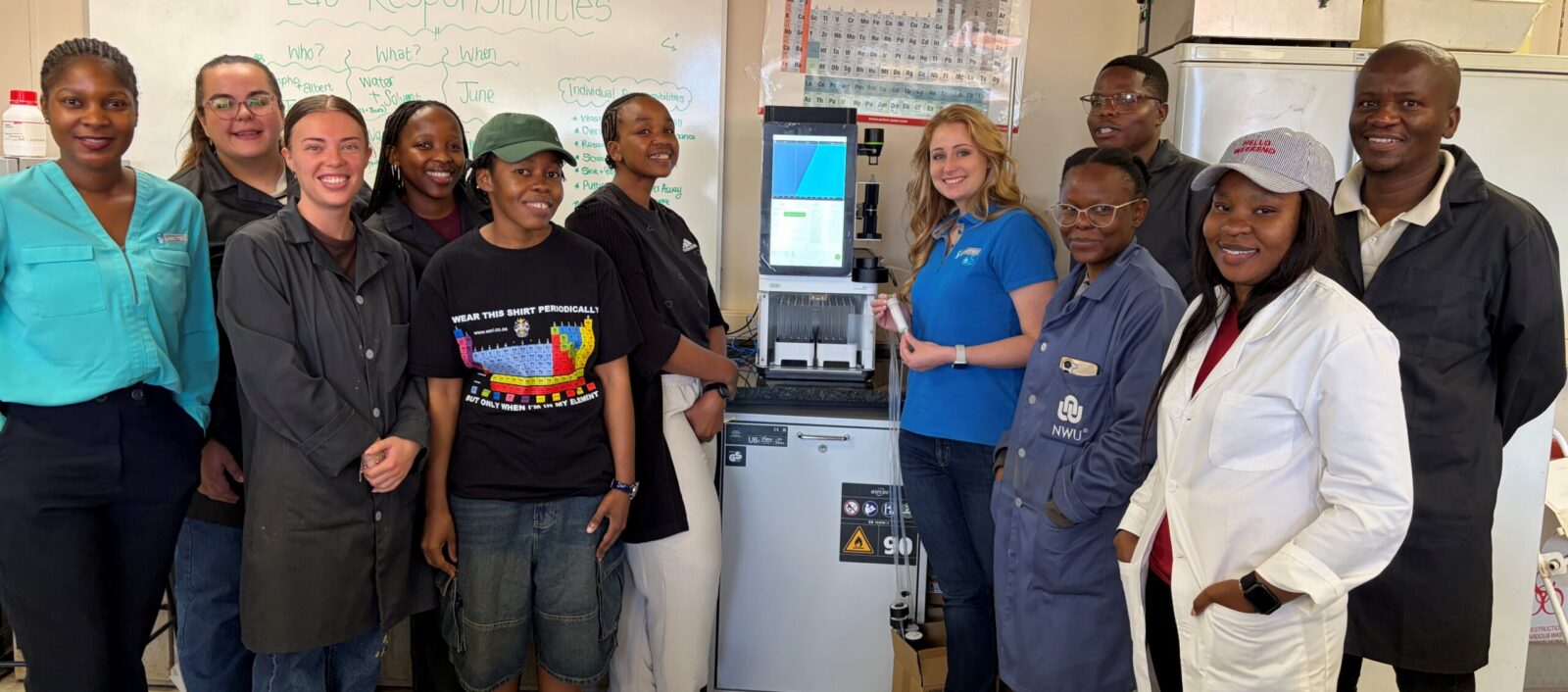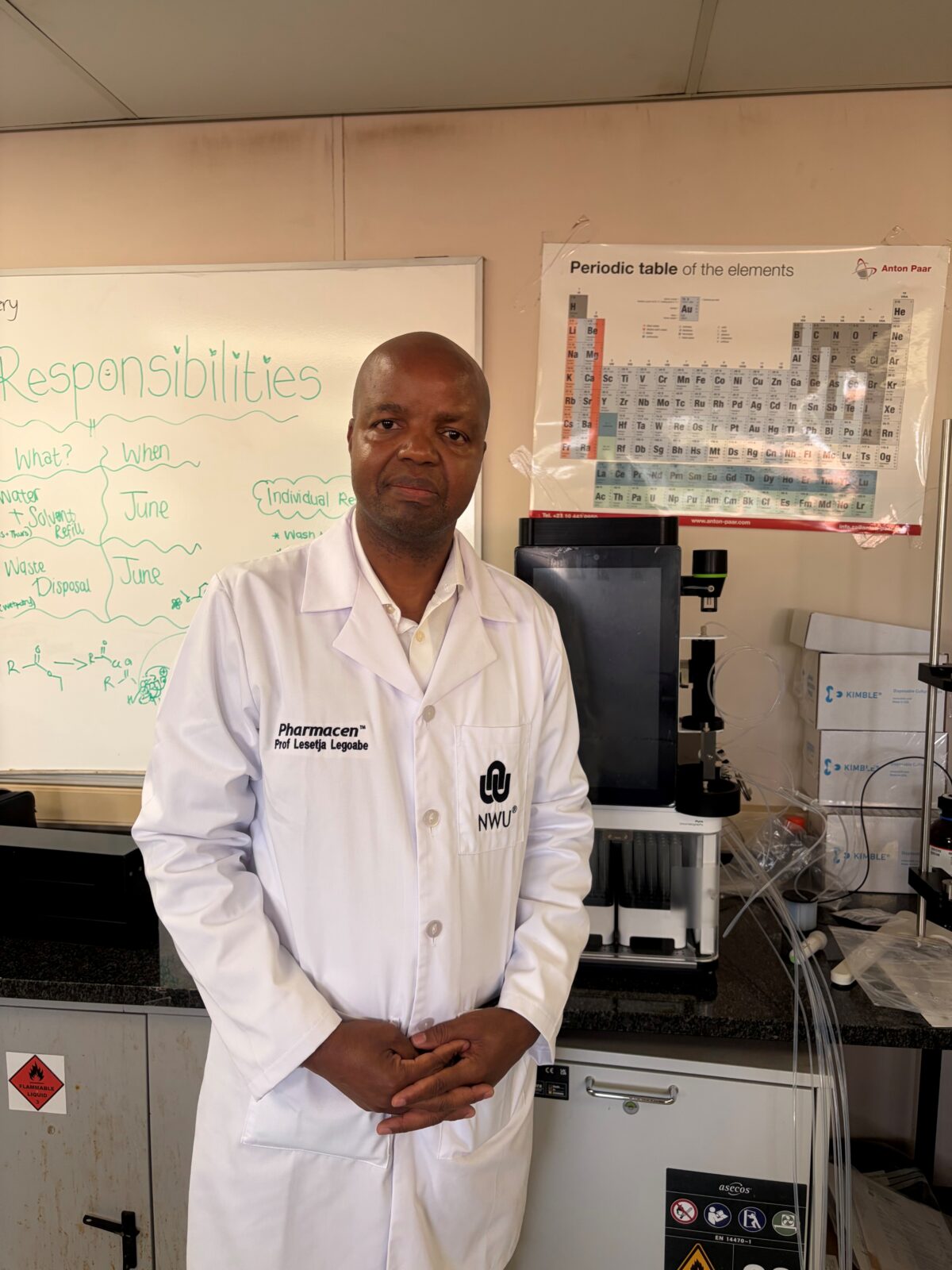
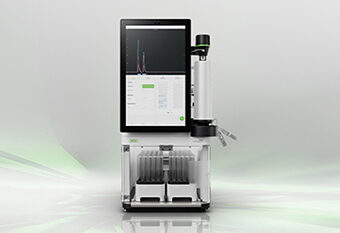
North-West University (NWU) has officially become the first research institution on the African continent to install Büchi’s state-of-the-art Pure C-950 Flash Chromatography platform featuring a fully integrated Evaporative Light Scattering Detector (ELSD). Delivered and supported by Labotec, this milestone installation empowers NWU’s synthetic medicinal chemistry group to accelerate early-stage drug discovery for Africa’s most pressing healthcare challenges.
“Our strength is synthetic chemistry. We need to produce as many compounds as possible to treat neglected diseases in Africa. Purification is our major bottle-neck. If we can automate and streamline purification, we can deliver pure compounds for biological evaluation in a fraction of the time” Prof. Lesetja Legoabe – NWU (PHARMACEN)
The customer’s mission: Overcoming the purification bottleneck
At NWU, researchers design and synthesize novel chemical entities (NCEs) targeting infectious diseases, such as drug-resistant tuberculosis (TB), and parasitic diseases, including malaria, trypanosomiasis and leishmaniasis. While synthetic chemistry is their core strength, moving novel molecules from reaction flasks to biological screening assays requires pristine purity. For years, manual open-column chromatography was the laboratory’s main bottleneck: a slow, solvent-heavy process that delayed biological testing.
Why NWU selected Büchi: Single-chassis innovation and solid loading
North-West University selected the Buchi platform primarily for its single-chassis dual detection, seamlessly combining UV/Vis and ELSD to capture both chromophoric and non-chromophoric analytes without requiring extra modular attachments. To handle complex crude mixtures, the system’s solid sample loading pre-absorbs compounds onto dry silica, eliminating solvent band broadening and maximizing column capacity. This hardware efficiency is further enhanced by intelligent software like the Navigator tool, which converts simple TLC data into solvent-saving run gradients, alongside mobile app connectivity for real-time remote oversight across the laboratory.
Empirical wet-lab chemistry vs. computational AI models
Beyond hardware, the installation highlights NWU’s commitment to rigorous empirical science. While artificial intelligence (AI) and Computer-Aided Drug Design (CADD) offer valuable tools for docking predictions, physical wet-lab testing in living biological systems remains irreplaceable. In silico models evaluate static target binding, but candidate drugs must cross complex cell membranes, lipid bilayers, and metabolic pathways in live assays. Major breakthroughs like Sildenafil and GLP-1 receptor agonists prove that live biological testing and observational serendipity frequently reveal unpredicted therapeutic mechanisms.
A Hands-On Partnership with Labotec
Labotec supports NWU with hands-on onboarding, accessory audits, video training, and direct specialist access. This partnership ensures NWU fully leverages the system’s core capabilities: integrated ELSD optics for non-UV detection, solid sample loading for distortion-free capacity, an inline splitter preserving over 95% yield, and automated TLC-to-gradient method optimization. Ultimately, combining Buchi’s technology with Labotec’s ongoing support empowers NWU researchers to spend less time packing columns and more time advancing high-impact drug discovery.
Contact Labotec today to discuss your analytical and separatory needs:
sales@lasec.co.za
+27 (0) 11 315 5434
www.labotec.co.za